
The Ultimate Guide to Multi-Drop Courier Jobs in the UK
The UK postal and courier industry is projected to reach a staggering £30.3 billion by the end of 2026. This massive growth is creating an urgent demand for reliable professionals to fill multi-drop courier jobs across the country. You might feel some anxiety about the pressure of high-volume routes or the complexity of self-employed tax obligations. It's natural to worry about whether the work will stay consistent or if you will be left to figure things out on your own.
We believe that starting a new career should feel like an opportunity, not a burden. This comprehensive guide shows you how to launch a successful career in last-mile logistics with total confidence. You will discover how to secure stable daily routes and gain a clear understanding of your potential earnings. We also cover essential 2026 updates, such as the new Right to Work checks for self-employed drivers and the latest tachograph exemptions for zero-emission vehicles. This article provides the roadmap you need to move from uncertainty to a professional, supported role on the road.
Key Takeaways
- Understand the vital role of last-mile logistics and the volume expectations for a standard UK shift.
- Identify the legal requirements and vehicle specifications you need to secure multi-drop courier jobs.
- Learn how the self-employed model offers flexibility and the freedom to manage your own daily schedule.
- Discover proven loading techniques and organisation methods that save time and reduce route pressure.
- Find out how professional training and consistent routes help you transition smoothly into a stable logistics career.
What Are Multi-Drop Courier Jobs?
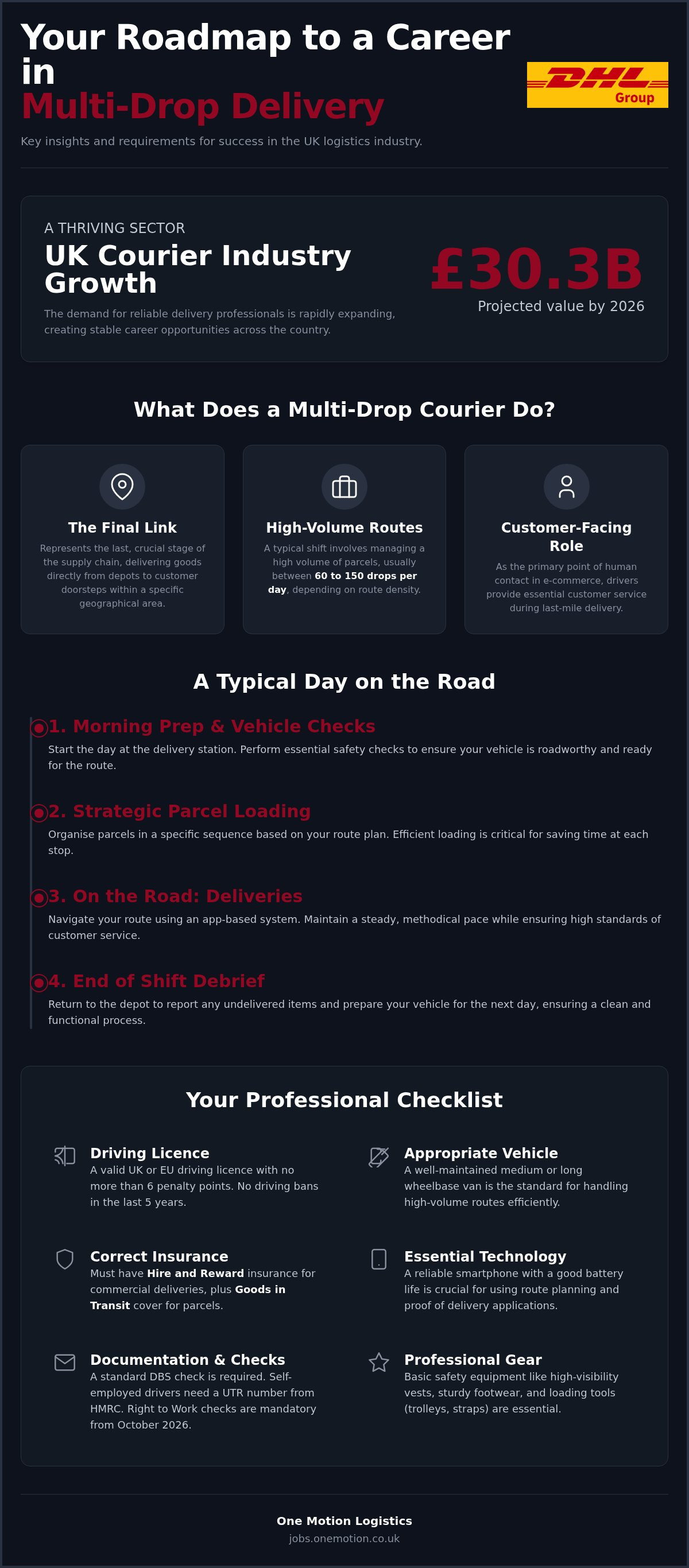
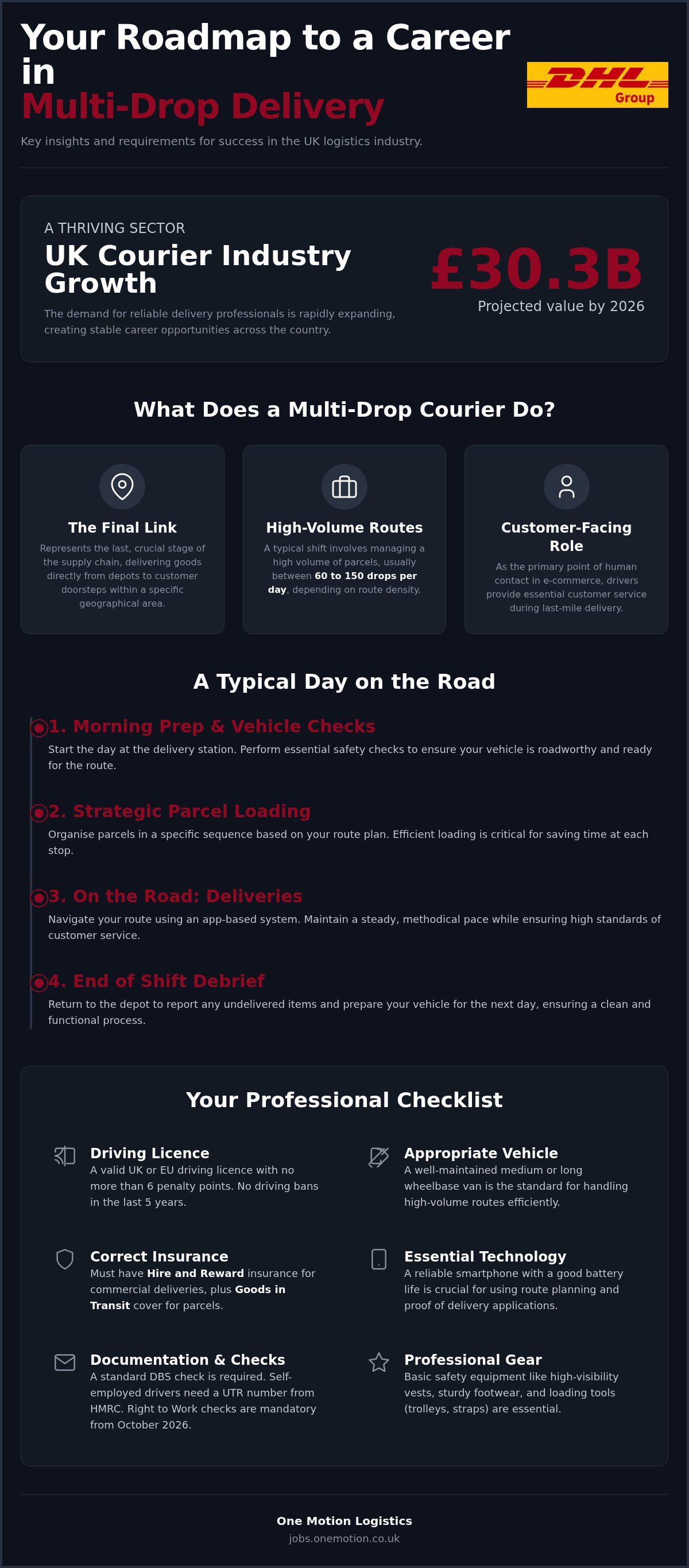
Multi-drop courier jobs are the engine room of modern British commerce. At its core, this role involves delivering multiple packages to various addresses within a specific geographical area. It represents the final link in the supply chain. While long-haul drivers move goods between massive depots, a multi-drop driver brings items directly to the customer's doorstep. This sector is a vital part of the package delivery industry, ensuring that everything from online shopping to urgent business supplies reaches its destination on time.
A typical UK shift usually involves handling a high volume of stops. Depending on the route density and the vehicle size, you might manage anywhere from 60 to 150 drops per day. The variety of goods is broad. You won't just be delivering small envelopes; you'll handle retail fashion, home electronics, and essential supplies for local businesses. To keep this process smooth, modern logistics relies on high-efficiency, app-based management systems. These tools handle route planning and digital signatures, removing the guesswork for the driver.
The Role of Last-Mile Logistics
Last-mile delivery is the most important part of the customer journey. It's the only time a consumer actually interacts with a person from the supply chain. Because e-commerce continues to grow, the demand for reliable drivers has never been higher. Professional logistics companies like One Motion Logistics organise daily operations to ensure routes are logical. This structure helps reduce the pressure often associated with high-volume work. It makes the job more about efficiency than just driving fast.
A Day in the Life of a Multi-Drop Driver
Your day starts at a delivery station. First, you'll perform essential vehicle safety checks to ensure everything is roadworthy. Loading comes next. This is a critical skill. You'll organise parcels so they are easy to grab at each stop, following a specific sequence. Once you're on the road, the rhythm is fast-paced but methodical. You'll balance the need for steady progress with high standards of customer service. At the end of the shift, you'll return to the depot for a quick debrief. You'll report any undelivered items and ensure the vehicle is ready for the next day. It's a clean, functional process that values your effort.
Essential Requirements for UK Multi-Drop Delivery Drivers
Getting started in multi-drop courier jobs requires more than just a vehicle and a GPS. You need a specific set of legal and professional credentials to operate safely and legally on UK roads. The foundation is a valid UK or EU driving licence. Most logistics partners require you to have no more than six penalty points and no driving bans within the last five years. From October 2026, right-to-work checks are also mandatory for all self-employed couriers. This ensures every driver on the road is fully compliant with national regulations.
Insurance is another non-negotiable factor. You cannot use standard social and domestic insurance for commercial deliveries. You must have Hire and Reward insurance. This covers you for carrying other people's goods for payment. Additionally, Goods in Transit insurance protects the parcels themselves. Being properly insured helps you avoid the challenges of the gig economy where lack of protection can lead to financial strain. If you meet these standards, you can find professional delivery driver jobs that offer the stability you need.
Documentation and Background Checks
Expect a standard Disclosure and Barring Service (DBS) check. This is a routine part of the onboarding process for most professional logistics networks. It builds trust with customers and ensures safety across the board. If you're working as a self-employed contractor, you'll also need your Unique Taxpayer Reference (UTR) from HMRC. Keeping your documentation organised from day one makes the registration process much faster. A clean record and clear paperwork are your best assets when applying for new roles.
Equipment and Technology Needs
Your smartphone is your most important tool for succeeding in multi-drop courier jobs. Modern logistics relies on dedicated apps for route planning and proof of delivery. A reliable handset with a good battery life is essential. You'll also need a vehicle that meets specific volume requirements. For high-volume routes, a medium or long wheelbase van is usually the standard. Ensure your van is equipped with basic safety gear like high-visibility vests and sturdy footwear. Loading equipment like trolleys and load straps will protect your health and your cargo. A well-maintained vehicle is the backbone of your business. It prevents breakdowns and ensures you can complete your daily routes without interruption.
Understanding the Self-Employed Courier Model
Choosing self-employment is a popular route for many in the UK logistics sector. It changes the dynamic from being a traditional employee to becoming your own boss. When you take on multi-drop courier jobs as a contractor, you are essentially providing a professional service to a larger logistics network. This model offers a level of autonomy that fixed roles rarely provide. It's about taking control of your professional life and building a career on your own terms.
While you have more freedom, you also take on specific professional obligations. You'll need to manage your own tax and National Insurance contributions through the self-assessment system. You'll also need to keep accurate records of your business expenses, such as fuel and vehicle maintenance. Reviewing the UK delivery driver requirements helps you understand the standard expectations for this career path. It is a straightforward process once you establish a routine and understand the basics of small business management.
The Benefits of Being Your Own Boss
Flexibility is the primary draw for many drivers. You aren't stuck in a rigid 9-to-5 schedule. You can often choose shift patterns that fit around your personal life and family commitments. This creates a much better work-life balance than traditional transport roles. There is also a significant financial incentive. Unlike fixed-salary positions, self-employed roles often feature an "earn what you deliver" structure. This directly rewards your efficiency. If you are organised and manage your route well, your earning potential increases. This sense of independence makes every shift feel like real progress.
Support Systems for Self-Employed Drivers
You might worry about being isolated, but being self-employed doesn't mean working alone. Professional logistics partners provide the support you need to succeed. They handle the complex task of finding clients and securing consistent work. You get access to steady daily routes without any marketing stress. Some roles even offer practical help like fuel cards or van hire schemes. These options reduce the initial financial barrier to entry for new drivers. You also benefit from professional networks that provide route planning and troubleshooting. If you hit a snag on the road, there is usually a team ready to help. It's a professional partnership designed to help you thrive in the logistics industry.
Mastering Efficiency: Tips for High-Volume Multi-Drop Routes
Efficiency is the secret to success in multi-drop courier jobs. It's not just about how fast you drive. It's about how well you prepare before the engine even starts. A disorganised van leads to wasted minutes at every stop. Those minutes add up to hours by the end of the shift. By mastering a few professional techniques, you can reduce stress and finish your route earlier. Preparation is the best way to handle the pressure of high-volume days and ensure you maintain a professional pace.
The "parcel sequence" method is a game changer for high-volume routes. This involves arranging your load so the next delivery is always within reach. Professional route optimisation software handles the complex maths of your day. It accounts for traffic, one-way systems, and time-sensitive windows. Trusting the technology allows you to focus on safe driving and excellent service. AI-driven tools can now predict delivery windows with incredible accuracy, helping you meet customer expectations without feeling rushed.
Smart Loading Strategies
The "first-in, last-out" loading principle ensures the parcels for your final stops are at the front of the bulkhead, while your first deliveries sit right by the doors. Grouping parcels by postcode or delivery zone is another essential habit. This prevents you from hunting through a mountain of freight for a single small envelope. Organise your van into clear zones to make finding items effortless. Safety is also a priority. Always stack heavier items at the bottom and use load straps to prevent shifting. This protects both the goods and your vehicle's handling. If you're ready to put these skills into practice, check out our current multi-drop courier jobs.
Navigating Your Route Like a Pro
Traffic hotspots and unexpected roadworks can derail a well-planned day. Use live navigation apps to stay ahead of delays and find alternative paths. Effective communication also saves time. If a customer isn't home, following "safe place" instructions quickly keeps your momentum. Always take clear photos of where you've left the parcel to provide proof of delivery and avoid disputes. Handling time-sensitive windows requires focus. Prioritise these drops as soon as they appear in your sequence. Don't forget your own well-being. Staying hydrated and taking scheduled breaks is vital for road safety. A tired driver is an inefficient driver. Manage your energy as carefully as you manage your route to ensure a successful and sustainable career in logistics.
Starting Your Journey with One Motion Logistics
Launching a career in the transport sector shouldn't feel like a solo mission. One Motion Logistics acts as a dedicated facilitator for individuals looking to secure stable multi-drop courier jobs across the UK. We specialise in last-mile solutions and driver recruitment, bridging the gap between national demand and professional delivery talent. Our primary commitment is connecting you with consistent, professional routes that provide long-term operational stability. This supportive approach removes the anxiety of searching for clients, allowing you to focus on delivering high standards of service every day.
We believe in readiness and assistance. Entering a new field can be daunting, but we've designed our onboarding to be inclusive and low-pressure. Instead of the coldness found in traditional recruitment, we offer a welcoming environment where your success is our priority. We provide the necessary training to ensure you feel confident behind the wheel and at the customer's door. This partnership is built on efficiency, openness, and a shared goal of moving the UK's goods safely and effectively.
Why Choose One Motion?
One Motion has a 10-year history of operational excellence in the UK. Since our founding in 2014, we've developed professional logistics solutions for some of the country's most prominent clients. We value simplicity and transparency above all else. This means you'll benefit from a clear, reliable payment structure that respects your hard work. We act as a "straight shooter," providing all the essential tools and information upfront without any hidden complexities. Our network is deeply rooted in its operational areas, offering you the chance to work with a modern, localised expert that values your contribution to the team and helps you thrive in multi-drop courier jobs.
How to Apply Today
The path from application to your first delivery is straightforward and methodical. It starts with a simple online process that respects your time. Once you've submitted your details, we'll guide you through a professional briefing. This session covers everything from route planning to the latest 2026 regulations, ensuring you're fully prepared for the road. We invite you to join a community that values efficiency and steady progress. By choosing One Motion, you're not just finding work; you're joining a professional logistics network dedicated to your success. Take the first step today and discover how easy it is to start a rewarding career in last-mile delivery.
Take the Next Step in Your Logistics Career
The UK logistics sector is moving faster than ever. You now have the tools to understand the self-employed model and the efficiency strategies needed to thrive on high-volume routes. From mastering the "first-in, last-out" loading principle to staying compliant with 2026 Right to Work checks, you're ready for the road. Success in this industry is built on professional partnerships and a "can-do" attitude. It's about finding a rhythm that works for your lifestyle whilst delivering excellent service to every customer.
Securing the best multi-drop courier jobs requires a partner that understands the challenges you face. One Motion Logistics offers consistent UK-wide delivery routes and a supportive onboarding process designed for new drivers. As professional last-mile logistics experts, we provide the stability and training you need to excel. You don't have to figure it all out alone. We're here to help you move forward with total confidence and operational support.
Don't wait for the perfect moment to start. Apply for multi-drop delivery jobs with One Motion today and join a team that values your efficiency and progress. Your journey into a professional logistics career starts here. We look forward to seeing you on the road soon.
Frequently Asked Questions
Do I need my own van for multi-drop courier jobs?
Not necessarily. Many providers offer van hire schemes or fuel card options to help you get started without high initial costs. If you choose to use your own vehicle, it usually needs to be a medium or long wheelbase van to handle the high volume of multi-drop courier jobs. This flexibility allows you to enter the industry quickly and start earning without needing a massive upfront investment in professional equipment.
How much can I expect to earn as a multi-drop delivery driver?
Earnings vary based on the number of parcels you deliver and the overall efficiency of your route. Most self-employed roles use an incentive-based structure where your daily income reflects your performance and speed. While specific figures depend on the logistics partner, many drivers find that their potential income increases significantly as they master their route sequences and reduce their time per stop through better morning organisation.
Is multi-drop delivery hard for beginners with no experience?
The first few days can feel fast-paced, but full training is provided to ensure you're ready for the road. You don't need prior experience to start. Most logistics partners offer professional briefings and support systems to help you learn route optimisation and loading techniques. With a "can-do" attitude and a bit of practice, the rhythm of the delivery day becomes second nature very quickly.
What is the difference between a courier and a multi-drop driver?
A standard courier might deliver a single urgent item over a long distance. A multi-drop driver focuses on a specific geographical area, delivering many parcels to different addresses in one shift. This role is the backbone of last-mile logistics. It requires high levels of organisation and the ability to manage frequent stops whilst maintaining a steady, professional pace throughout the entire working day.
What insurance do I need to work as a self-employed courier?
You must have Hire and Reward insurance to carry goods for payment on UK roads. Standard social and domestic policies are not sufficient for commercial work. Most drivers also opt for Goods in Transit insurance to protect the parcels against damage or loss. Having the correct professional cover ensures you're legally compliant and protected against the financial risks associated with the modern transport industry.
Can I work as a multi-drop driver part-time?
Many logistics partners offer flexible shift patterns that can accommodate different lifestyles and family commitments. Since most roles are self-employed, you can often choose the days you want to work based on current route availability. This flexibility is perfect for those balancing other responsibilities. It allows you to build a schedule that provides a healthy work-life balance whilst maintaining a steady professional income.
How many drops does a multi-drop driver do in a day?
The number of stops depends on the route density and the size of your specific delivery zone. On a standard UK shift, you might handle between 60 and 150 multi-drop courier jobs depending on the area. Urban routes often have higher drop counts because addresses are closer together. Rural routes might have fewer drops but involve more driving time. Your route optimisation software handles these variables automatically.
What happens if I cannot deliver a parcel on my route?
If a customer isn't home, you'll first look for a designated safe place or a helpful neighbour. Most delivery apps allow you to record these details and take a photo as proof of delivery. If no safe option exists, you'll return the parcel to the delivery station at the end of your shift during the debriefing process. Your team will then help reschedule the delivery for another time.